⚠ Important Notice — Not Legal Advice
The information contained on this page is for general informational purposes only. It is not legal advice, does not create an attorney-client relationship, and does not replace the advice of a qualified attorney. Inquilinos Juntos is not a law firm, and its representatives are not attorneys. We do not represent anyone in court or in any legal proceeding. Every housing situation is different. To receive legal advice specific to your case, consult a licensed California attorney. If your situation requires legal representation, we are happy to refer you to attorneys who handle tenant rights matters.

👥 Who We Are
At Inquilinos Juntos, we are advocates committed to protecting the rights of tenants in California. We know that dealing with a landlord can be intimidating, especially when you do not know the rights the law gives you. That is why we are here: to inform you, guide you, and help you prepare the documents you need.
We assist tenants facing excessive rent increases, poor housing conditions, eviction threats, landlord harassment, unfair withholding of security deposits, housing discrimination, and many other situations that affect their right to stable and safe housing.
Important: We are tenant rights advocates, not attorneys. We prepare documents and provide general information about your rights, but we do not represent you in court. When a situation requires legal representation, we refer you to qualified attorneys.
📄 Our Services
We offer the following services to California tenants who need help understanding and protecting their rights:
|
📝 Preparation of Letters to Landlords
We draft formal letters requesting repairs, responding to improper notices, disputing unlawful rent increases, demanding return of the security deposit, or documenting habitability problems.
|
📑 Preparation of Pleadings and Legal Documents
We prepare written responses, declarations, checklists, and other documents tenants may need in housing disputes, including responses to eviction notices.
|
|
📚 Tenant Rights Information
We explain your rights under California law, including limits on rent increases, just cause eviction protections, the right to habitable housing, and protections against discrimination and harassment.
|
👥 Attorney Referrals
When your situation requires legal representation in court or in formal negotiations, we refer you to California tenant rights attorneys who may be able to help.
|
|
📄 Evidence Documentation
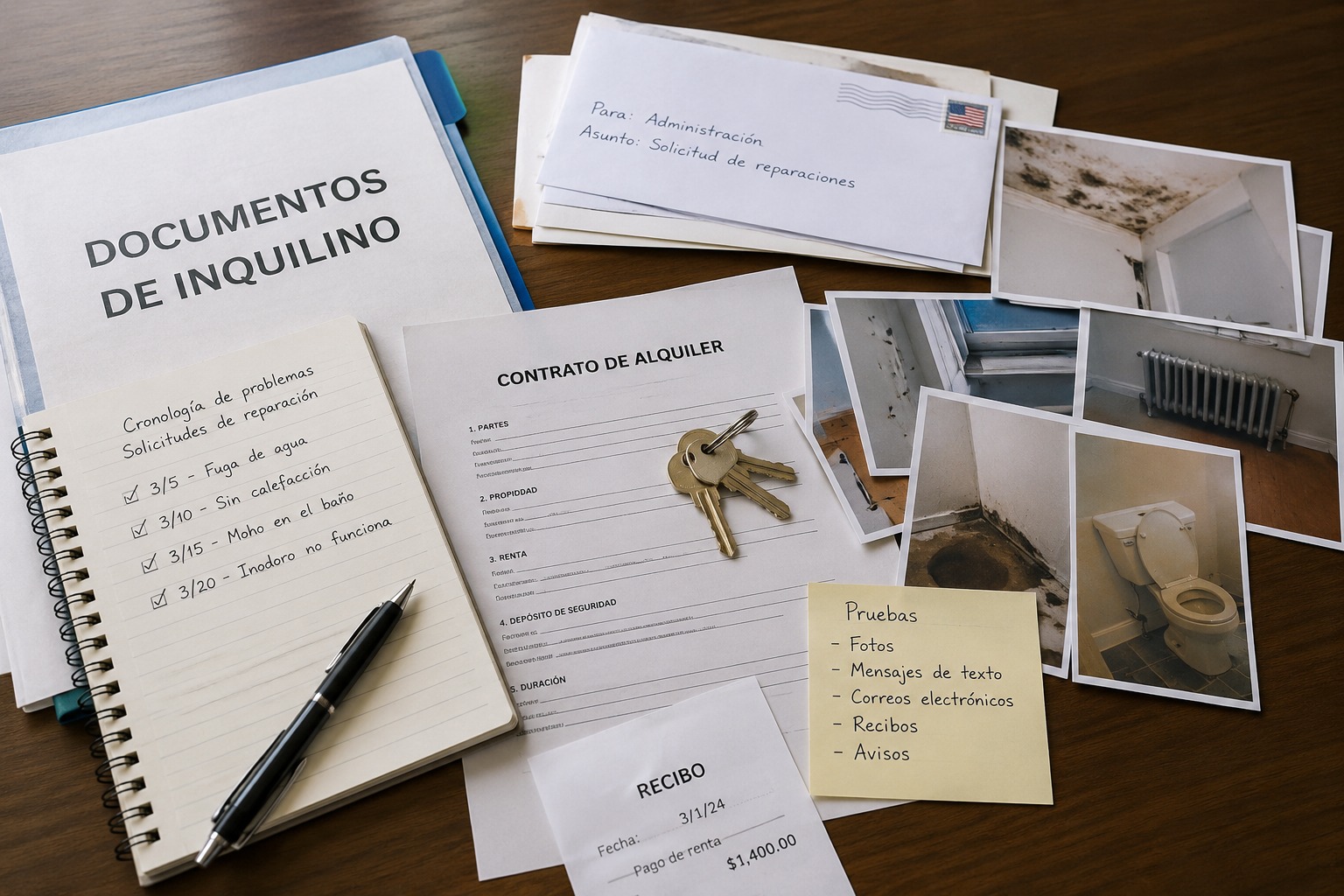
We help you organize and document evidence that may be important in your matter: communications with the landlord, photos of housing conditions, rent payment receipts, and other relevant documents.
|
📞 Support and Guidance
We are here to listen and guide you during a difficult time. We help you understand your situation, evaluate your options, and take the first steps to protect your home and your family.
|
🏠 Your Rights as a Tenant in California
Information based on current California state law
1. Limits on Rent Increases — Tenant Protection Act (AB 1482)
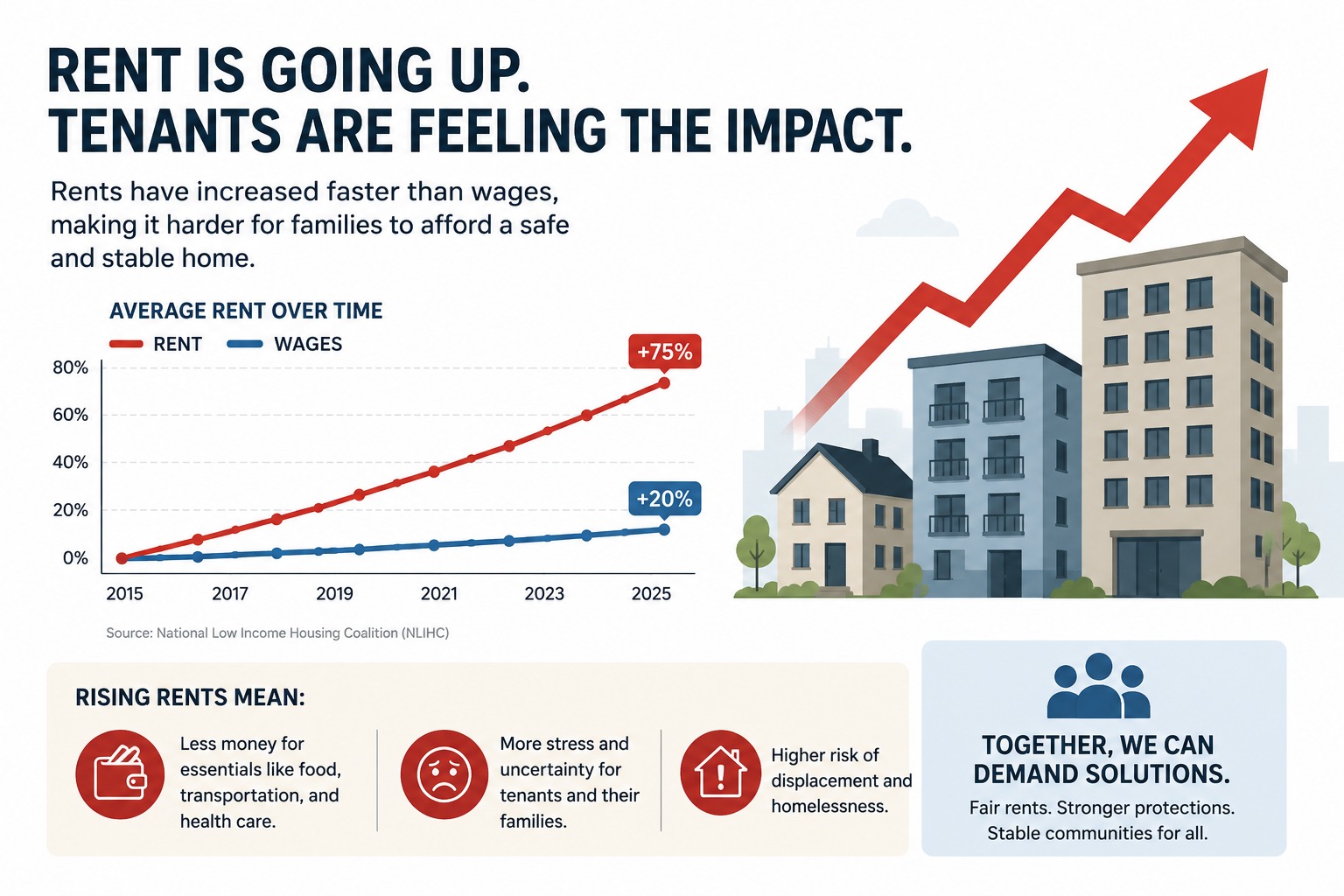
Since 2019, the Tenant Protection Act (AB 1482) has placed clear limits on how much your rent can be increased. Your landlord may not increase the rent by more than 10% total, or by more than 5% plus the percentage change in the cost of living (CPI) — whichever is lower — during any 12-month period.
For example: if the consumer price index increased by 3% in your area, your landlord cannot increase your rent by more than 8% (5% + 3%). If the CPI was 6%, the limit is still 10%, not 11%.
If several tenants move out of a unit and new tenants move in, the landlord may freely set the initial rent. But once you are living there, the limits apply.
Rent Increase Notice — Required Time Periods
A rent increase notice must always be in writing. It is not valid by phone, email, or text message alone.
• Increase of 10% or less: the landlord must give at least 30 days’ notice.
• Increase of more than 10%: the landlord must give at least 90 days’ notice.
If you did not receive timely written notice, the increase may not be valid. Call us.
Who Is Covered by AB 1482?
This law covers most residential rental properties in California. However, the following are outside its protection:
- Single-family homes that are not owned by a corporation or real estate investment trust (those owned by corporations are covered)
- Units with a certificate of occupancy issued within the last 15 years (this date moves forward over time, so a unit may eventually become covered)
- Duplexes where the owner lives in one of the two units, as long as the owner continues living there
- Units already covered by a more protective local rent control ordinance
- Affordable housing restricted by deed or government agreement
- University student housing
- Mobile homes or manufactured homes, unless they are owned by the park owner and rented out
Tenants with Section 8 Housing Vouchers: They are protected by this law. The voucher applies to the person, not the property, so market-rate rental units rented with Section 8 vouchers are covered by AB 1482.
Local laws: Many cities and counties in California have their own rent control ordinances that may be more protective than state law. Contact us to find out whether additional protections may apply in your area.
2. Protections Against Eviction — Just Cause
One of the most important rights you have as a tenant in California is the right not to be evicted without a valid reason recognized by law. After you have lived in your home for 12 months, the Tenant Protection Act requires the landlord to have “just cause” to evict you.
The law recognizes two types of permitted eviction:
| At-Fault Eviction |
No-Fault Eviction |
- Failure to pay rent
- Violation of a material term of the lease
- Creating a serious nuisance, causing damage, or using the unit for unlawful purposes
- Criminal activity on the property or directed at the landlord
- Refusing to allow lawful landlord entry for inspections or repairs
- Refusing to sign a new lease with terms similar to the prior lease
|
- The landlord or a close family member wants to move into the unit
- The landlord plans to demolish the unit or perform a substantial remodel that requires the tenant to vacate for at least 30 consecutive days
- The landlord is removing the unit from the rental market entirely
- The landlord must comply with a government order requiring the unit to be vacant
|
Special Rules for Owner Move-In Evictions
A tenant may only be evicted so the landlord, the landlord’s spouse, domestic partner, child, grandchild, parent, or grandparent can move in. The landlord or family member must:
• Move into the unit within 90 days after the tenant vacates.
• Live there as a primary residence for at least 12 consecutive months.
• If this does not happen, the landlord must offer the unit back to the tenant under the same rent and lease terms.
• The eviction notice must include the name of the person who will move in and that person’s relationship to the landlord.
Special Rules for Eviction Based on Substantial Remodel
Not every repair qualifies as a “substantial remodel.” To be valid, the remodel must:
• Involve replacing or substantially modifying a structural, electrical, plumbing, or other system that requires a building permit, or abating hazardous materials.
• Be unable to be performed safely while the tenant remains in the unit.
• Require the tenant to vacate for at least 30 consecutive days.
• Merely cosmetic renovations do not count.
The eviction notice must include a description of the work to be performed and copies of required permits.
🚨 Act Immediately if You Receive an Eviction Notice
Eviction deadlines are short. In many cases, you have only 3, 5, or 10 days to respond. Do not ignore any notice. Call us immediately at 661-823-0102.
Lying about the reason for an eviction is illegal. If you have doubts about whether the notice you received is legitimate or whether your landlord is complying with all legal requirements, contact us. You may also have a right to compensation if the landlord lied or failed to comply with legal requirements when evicting you.
3. The Right to Safe and Habitable Housing
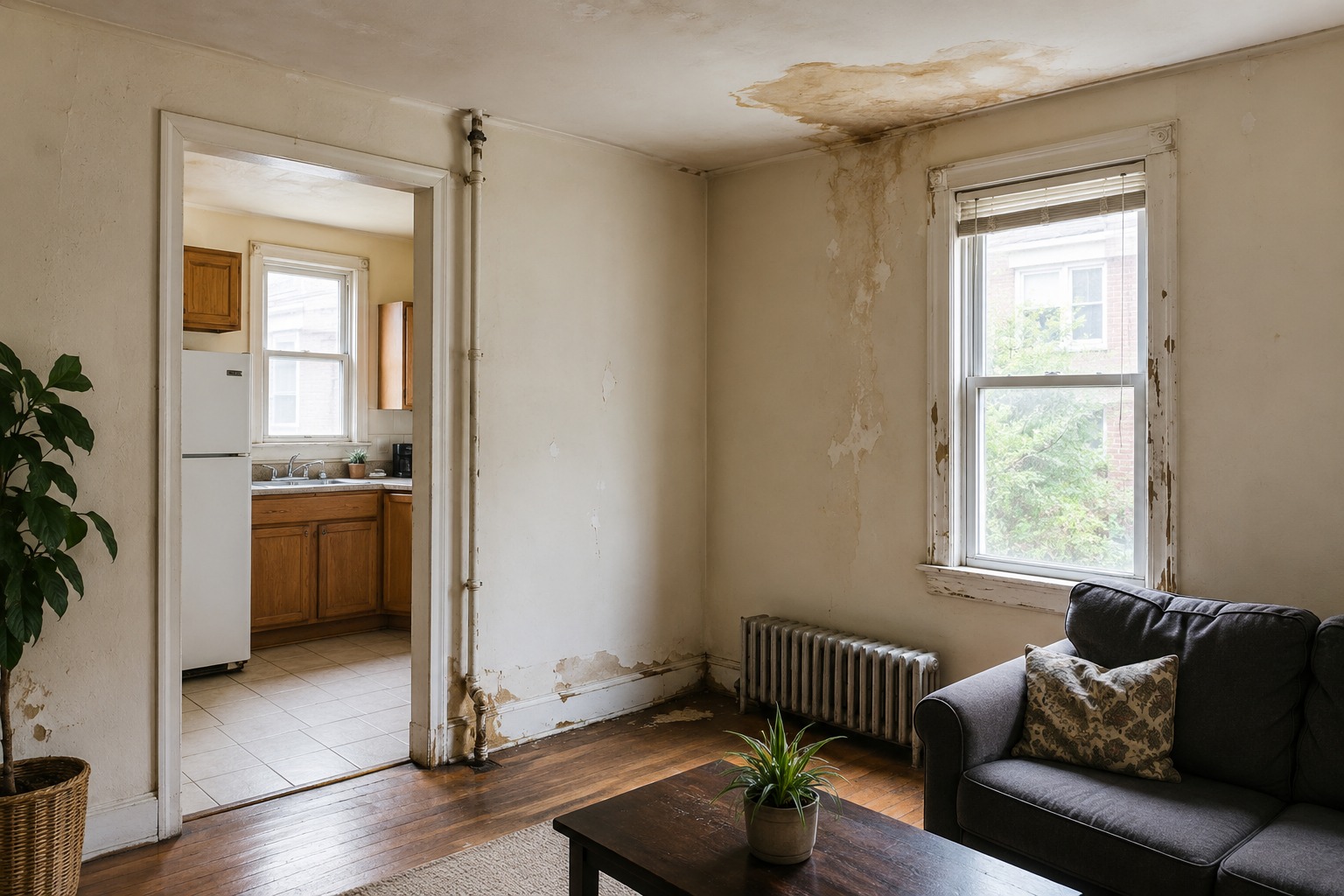
Every tenant in California has the right to live in a home that is safe, clean, and in good repair. This legal obligation is known as the duty of habitability, and it applies even if you knew the property had problems when you signed the lease.
The landlord is legally required to maintain:
| System |
Landlord’s Obligation |
| Plumbing |
Working hot and cold water; safe plumbing without leaks |
| Heating |
A working heating system in habitable rooms |
| Electrical system |
Safe electrical wiring and equipment in good condition |
| Structure |
Floors, stairs, walls, and ceilings that are safe and in good condition |
| Weatherproofing |
Weatherproof roof, windows, and walls; no water intrusion |
| Locks and security |
Doors and windows with working locks |
| Pests |
The property free of cockroaches, rats, mice, and other pests |
| Ventilation and lighting |
Adequate ventilation and lighting in habitable areas |
| Trash collection |
Sufficient containers and proper trash collection service |
| Common areas |
Hallways, stairs, laundry rooms, and other common areas that are clean and safe |
What Should You Do if Your Home Has Problems?
- Notify the landlord in writing. Send an email, text message, or certified letter describing the problem. Always keep a copy.
- Document everything. Take photos and videos of the problems. Write down the dates you reported them and the landlord’s response.
- Wait a reasonable amount of time. For urgent problems, such as no water, no heat in winter, or a serious infestation, the landlord must act quickly. For less urgent problems, the landlord has a reasonable time to respond.
- If the landlord does not act: Report the problem to your city or county code enforcement office or health department. These agencies may inspect the property and order the landlord to make repairs.
- Consult Inquilinos Juntos. We can help you prepare the repair request, the complaint to the authorities, and any other necessary documents.
⚠ If You Receive an Eviction Notice While There Are Habitability Problems
If there is a pending habitability complaint or unresolved health and safety problems, this may be relevant as a defense in an eviction case. Tell an attorney or Inquilinos Juntos about this immediately. In some cases, a landlord who tries to evict a tenant after the tenant reported habitability problems may be acting illegally.
4. The Security Deposit — Your Rights

At the beginning of your tenancy, your landlord may ask you for a security deposit. This deposit may be called by different names: “pet deposit,” “move-in fee,” “cleaning fee,” “damage deposit,” or any other name. Regardless of what it is called, the law sets clear limits.
Security Deposit Limit
For most residential rental properties, the landlord may not charge more than one month’s rent as a security deposit, regardless of what the landlord calls it.
What Can the Landlord Use the Deposit For?
The landlord may only withhold part or all of the deposit for:
- Rent you did not pay during the tenancy
- Repairing damage you caused beyond ordinary wear and tear from normal use of the home (for example, a hole in the wall is not normal wear and tear; normal floor wear from walking may be)
- Cleaning the unit if you left it less clean than it was when you moved in
- Replacing or restoring furniture or other landlord-owned items you were allowed to use under the lease, if you damaged them
Deadline to Return the Deposit
Within 21 days after you move out, the landlord must:
- Return the full deposit, or
- Send you the remaining balance along with a written itemized statement that explains each deduction, the cost of each repair or cleaning item, and the related receipts or invoices.
Protect Yourself Before Moving In
Before moving in, do a detailed inspection of the unit with the landlord or manager. Take photos and videos of everything. Ask the landlord to sign a move-in condition checklist. Keep all copies — this can be crucial if there is a dispute over the deposit at the end of the tenancy.
If the landlord does not return your deposit on time or makes unjustified deductions, you may have the right to claim not only the deposit, but also additional damages. Contact us for guidance about next steps.
5. Illegal Evictions — Lockouts and Utility Shutoffs
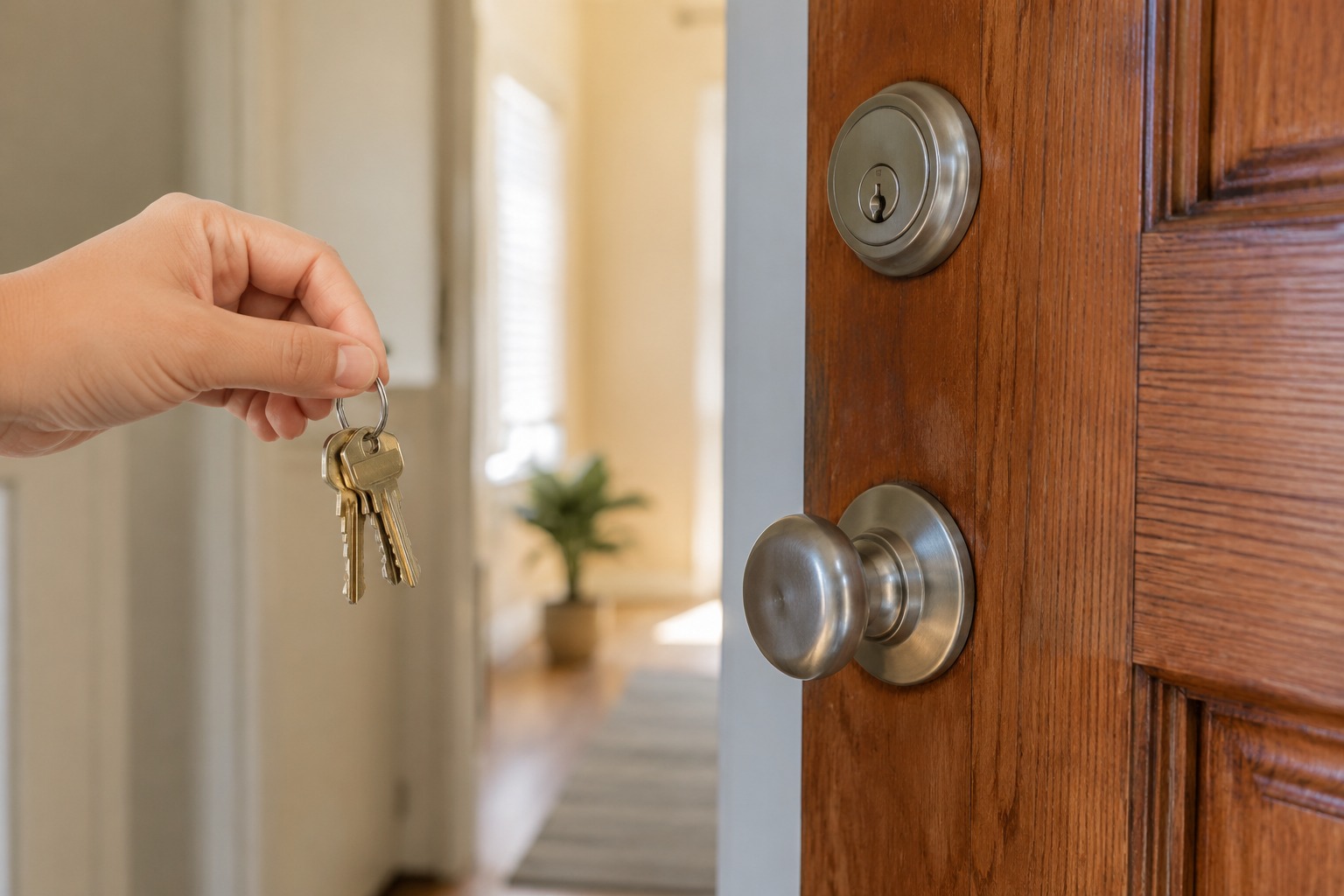
It is completely illegal for a landlord to try to force you out of your home without following the legal process. The following actions are illegal:
| Illegal Landlord Actions |
|
❌ Changing the locks without a court order
|
❌ Shutting off water, electricity, gas, or other essential services
|
|
❌ Removing your personal belongings from the unit
|
❌ Blocking or preventing access to the property in any way
|
|
❌ Removing doors, windows, or other parts of the structure to make you uncomfortable
|
❌ Harassing, intimidating, or threatening the tenant to make the tenant leave
|
The only legal way to evict a tenant in California is to file an eviction lawsuit, called an unlawful detainer, in court and wait for the judge’s decision. Only with a court order may a sheriff enforce an eviction.
If Your Landlord Took Any of These Actions, Call Us Immediately
You have the right to return to your home. You may also have the right to claim damages from the landlord, including actual damages plus additional civil damages. Phone: 661-823-0102
6. Protection Against Landlord Retaliation
California law protects you when you exercise your legitimate rights as a tenant. If you take any of the following protected actions, your landlord cannot retaliate against you:
- Requesting repairs or reporting unsafe or unhealthy housing conditions
- Pointing out that a rent increase does not comply with the law
- Contacting code enforcement, the health department, or other government agencies
- Organizing with other tenants in the building or participating in a tenant organization
- Exercising any other right California law gives you as a tenant
Retaliation can take many forms:
- Trying to evict you after you exercised one of the rights listed above
- Increasing the rent as punishment shortly after you reported problems
- Taking away services or privileges you previously had, such as parking, storage space, or access to common areas
- Increasing harassment or unscheduled inspections
- Deliberately reducing maintenance services
Legal Presumption in Your Favor
If the landlord takes negative action against you within 180 days, or 6 months, after you exercised a protected right, California law presumes that the action is retaliation. The burden is on the landlord to prove that it was not retaliation. Keep evidence of all communications and the dates when you exercised your rights.
7. Protection Against Housing Discrimination

California law strictly prohibits landlords from discriminating in renting, lease terms, or the eviction process based on protected personal characteristics. This protection applies both when seeking housing and throughout the tenancy.
Characteristics Protected by California Law:
- Race or color
- National origin or ancestry
- Religion
- Sex or gender
- Sexual orientation
- Gender identity or expression
- Marital status
- Familial status, such as having minor children
|
- Physical or mental disability
- Source of income, including Section 8 and other subsidies
- Veteran or military status
- Citizenship or immigration status
- Primary language
- Age
- Medical condition
- Any other arbitrary personal characteristic
|
Ways Discrimination May Appear:
- Refusing to rent to you because you belong to a protected group
- Offering you less favorable rental terms than other tenants
- Applying different rules or requirements to you than to other tenants
- Selecting you for eviction in a discriminatory way
- Harassing you or creating a hostile housing environment
- Refusing to make repairs in your unit while making repairs in others
🔒 Special Protections for Immigrant Tenants
In most cases, your landlord does not have the right to ask about your immigration or citizenship status. A landlord is strictly prohibited from:
• Threatening to report your immigration status to pressure you to leave your home.
• Reporting or threatening to report you to immigration authorities as harassment or retaliation.
• Using your immigration status in any way to intimidate or control you.
These actions are illegal harassment and may lead to serious legal consequences for the landlord. Your rights as a tenant are independent of your immigration status.
8. Reasonable Accommodations for People with Disabilities
Landlords are legally required to make reasonable accommodations so tenants with disabilities can fully enjoy their housing on equal terms.
What Are Reasonable Accommodations?
- Adjustments to rules or policies: For example, a landlord with a “no pets” policy must make an exception for a tenant who needs a service animal or emotional support animal, without charging any additional fee for it.
- Physical modifications to the unit: The landlord must allow reasonable physical modifications, such as installing grab bars in a bathroom or access ramps, so a tenant with a disability can fully use the home. In most cases, the tenant is responsible for the cost of these modifications.
- Administrative adjustments: For example, accepting rent payment in a different format or making changes to communication procedures.
Important
The landlord may not charge you for reasonable accommodations, such as an exception for a service animal. If you are being denied or charged for a reasonable accommodation you are entitled to, consult an attorney or contact us for guidance.
9. Protection Against Price Gouging During Emergencies
During declared states of emergency, such as natural disasters, fires, floods, pandemics, or other crises, price gouging laws may apply to rental properties. This can significantly limit allowed rent increases during and after the emergency.
Many cities and counties also have their own emergency ordinances that provide additional protections. If you believe your landlord is taking advantage of an emergency to raise your rent unfairly, contact us.
10. General Landlord Responsibilities
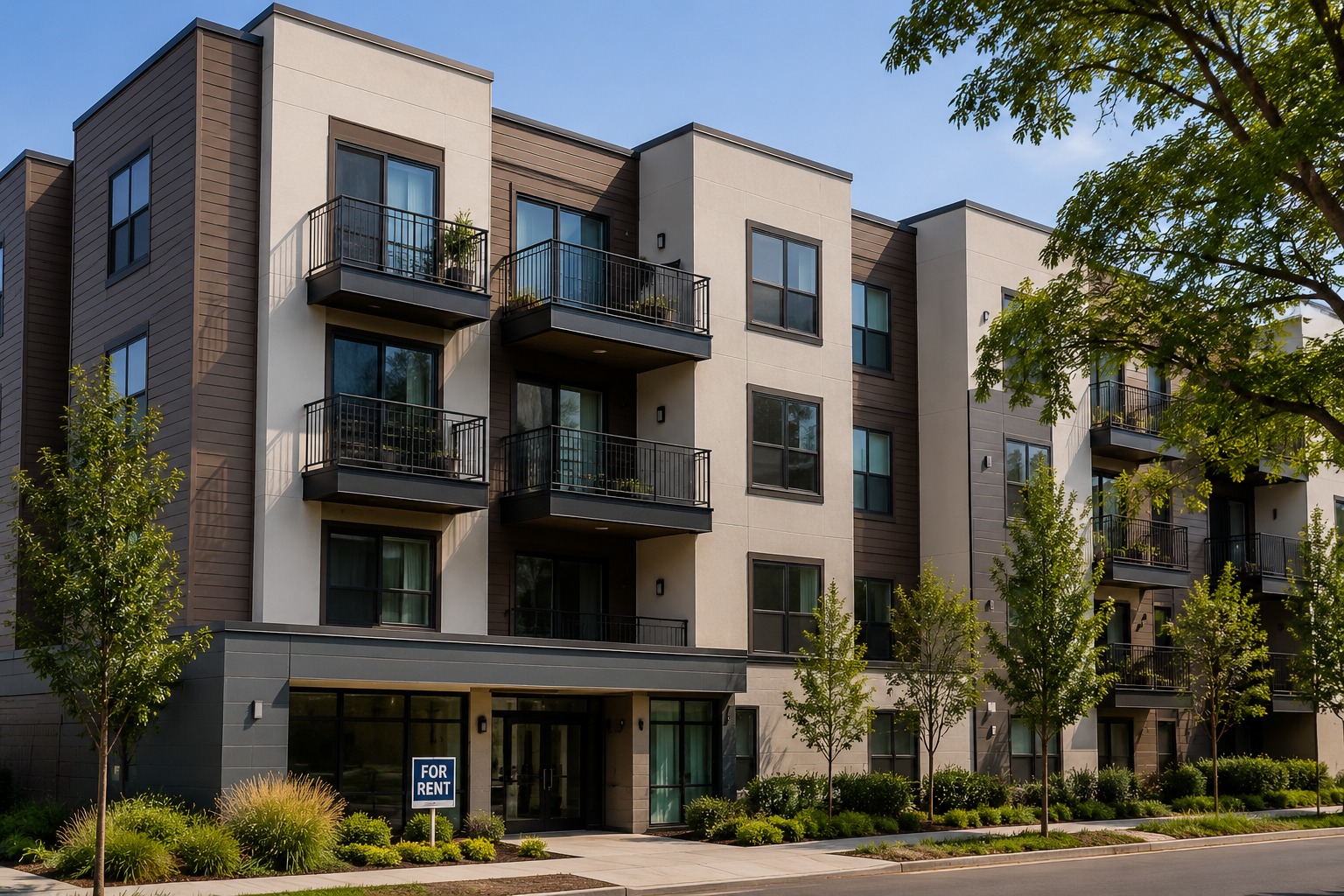
In addition to the specific protections already described, California landlords have several general responsibilities they must follow throughout the tenancy:
| Responsibility |
Description |
| Notice of Entry |
In most cases, the landlord must give at least 24 hours’ written notice before entering your home. Only in genuine emergencies may the landlord enter without notice. The landlord may not enter to harass or monitor you. |
| Lease Agreement |
The landlord must give you a copy of the signed lease agreement. If there are changes to the lease, they must be in writing and made with your consent. Lease clauses that violate California law are invalid even if you signed them. |
| Required Disclosures |
The landlord is required to inform you about certain known risks on the property, such as the presence of lead-based paint, asbestos, mold issues, or whether the property is in a high-risk seismic or flood zone. |
| Contact Information |
The landlord or manager must provide a name and address where you can send notices and legal communications. If the landlord changes or the property is sold, the new owner assumes the obligations of the existing lease. |
| Payment Receipts |
If you pay rent in cash or by cashier’s check, the landlord must give you a written receipt. Always keep proof of your rent payments. |
🚨 What Should You Do if You Receive an Eviction Notice?

Deadlines in eviction cases are very short. In many cases, you have only 3, 5, or 10 days to respond. DO NOT WAIT.
- Do not ignore the notice. Ignoring an eviction notice almost always makes your situation worse. The court process may move forward quickly even without your participation.
- Read the notice carefully. Write down the exact date it was delivered, the type of notice it is, such as 3-day, 30-day, or 60-day, and the reason stated.
- Call Inquilinos Juntos immediately: 661-823-0102. We can help you understand the notice and prepare the documents needed to respond.
- Gather your documents. Have ready: your lease agreement, all rent payment receipts, communications you have had with the landlord, photos of any housing problems, and any prior notices you received.
- Document the condition of the home. If there are unresolved habitability problems, take photos and videos right away. This may be relevant as a defense.
- Do not sign anything without understanding it. The landlord may offer you a move-out agreement. Do not sign unless you fully understand what rights you are giving up.
- Do not leave your home because of landlord pressure. Moving “voluntarily” before you need to may affect your legal rights.
- If you do not qualify for free legal assistance and need an attorney, we can refer you to one. You may also visit www.LawHelpCA.org to find free or low-cost legal help near you.
❓ Frequently Asked Questions

Can my rent be raised at any time and by any amount?
No. In most cases covered by AB 1482, the increase cannot exceed 5% plus CPI, with a maximum of 10%, in a 12-month period. In addition, the notice must be in writing and given at least 30 days in advance, or 90 days if the increase is more than 10%. Many cities also have additional limits. If your building is more than 15 years old and is not covered by another exception, you likely have these protections. Call us to verify.
Can I be evicted without being given any reason?
After you have lived in a unit covered by AB 1482 for more than 12 months, the landlord needs a just cause recognized by law to evict you. The landlord cannot simply tell you to leave “because they want to.” If you received an eviction notice without a valid reason, it may be challengeable. Contact us to evaluate it.
My apartment has cockroaches, mold, and the heat does not work. What can I do?
You have the right to require your landlord to make necessary repairs. First, notify the landlord in writing, by email or certified mail. Take photos and videos of all problems. If the landlord does not respond within a reasonable time, you may report the problem to your city’s code enforcement office or health department. At Inquilinos Juntos, we can help you prepare the repair request letter and document your case.
The locks were changed or my water was shut off. What should I do?
This is an illegal eviction. Call us immediately at 661-823-0102. You have the right to return to your home and to claim damages from the landlord. You may also call the police, because this may be a crime. Do not permanently leave the property for this reason — you may lose important rights.
How long does the landlord have to return my deposit?
The landlord has 21 days from the date you move out to return your deposit or send you the remaining balance with an itemized statement of deductions and the related receipts. If the landlord does not meet this deadline or the deductions are not justified, you may have the right to claim double or triple the deposit as damages. Keep evidence of the condition of the home when you left.
Does my immigration status affect my rights as a tenant?
No. Your rights as a tenant under California law are independent of your immigration status. Your landlord cannot ask about your immigration status and is strictly prohibited from threatening to report your status to pressure you to leave your home. That is illegal and may lead to serious legal consequences for the landlord.
I need an emotional support animal. Can the landlord charge me for it?
No. If you have a disability and need a service animal or emotional support animal, the landlord must make an exception to a “no pets” policy as a reasonable accommodation, without charging any additional fee. You will need documentation from a health care professional confirming your need. Consult us if you are having problems with this situation.
My rent was increased after I asked for repairs. Is that legal?
It may be illegal retaliation. If the landlord took a negative action, such as raising the rent, trying to evict you, or taking away privileges, within 180 days after you exercised a protected right, such as requesting repairs, the law presumes it is retaliation. Keep evidence of your communications and dates. Contact us to evaluate your situation.
My lease expired. Can the landlord ask me to leave?
Not necessarily. When a fixed-term lease expires and you continue paying rent, it usually becomes a month-to-month tenancy. If you have lived there for more than 12 months and the property is covered by AB 1482, the landlord still needs just cause to evict you. The simple expiration of the lease is generally not enough for a lawful eviction under those circumstances.
Can Inquilinos Juntos represent me in court?
No. We are tenant rights advocates, not attorneys. We do not represent anyone in court or in any legal proceeding. However, we can prepare important documents, provide general information about your rights, and refer you to a qualified attorney when your situation requires it.
🌐 Additional Resources for Tenants in California
| Resource |
Description |
| www.LawHelpCA.org |
Directory of free or low-cost legal aid offices throughout California. If you cannot afford an attorney, this is the first place to look for direct legal help. |
| California Attorney General — Tenant Rights |
Official information from the California Attorney General about the Tenant Protection Act, limits on rent increases, eviction causes, habitability, and much more. Available in multiple languages. |
| Housing is Key — Tenant Resources |
Official State of California portal with information about housing resources, rental assistance, and tenant protections. |
| California Civil Rights Department |
For filing housing discrimination complaints. This department investigates violations of California civil rights laws. |
| California Courts Self-Help |
Self-help resources for tenants facing eviction without legal representation. Forms, guides, and explanations of the court process. |
| State Bar of California — Referral Services |
If you do not qualify for free legal assistance, the State Bar of California can refer you to a certified lawyer referral service. |

Do Not Face This Situation Alone
If you or someone you know needs help with a housing situation, the sooner you act, the more options you may have. We are here to guide you, prepare your documents, and help you protect your rights.
📞 661-823-0102
www.InquilinosJuntos.com
Preparation of letters, pleadings, and documents | Tenant rights information | Attorney referrals when needed
Legal Notice and Limitation of Liability
The information provided on this page is for general informational and educational purposes only. It is not legal advice and does not create an attorney-client relationship between the reader and Inquilinos Juntos. This information is general in nature and is not tailored to the specific circumstances of any particular person or situation. California laws change frequently, and individual circumstances vary significantly. The information presented here may not reflect the most recent legal changes or the specific rules of your city or county.
Inquilinos Juntos is not a law firm, and its representatives are not licensed attorneys authorized to practice law. Inquilinos Juntos does not represent anyone before courts, tribunals, government agencies, or in any judicial or quasi-judicial proceeding. The services offered by Inquilinos Juntos are limited to document preparation and providing general information about tenant rights.
To receive specific and personalized legal advice about your housing situation, consult a licensed California attorney who handles tenant rights matters. If you cannot afford an attorney, you may search for free or low-cost legal assistance through www.LawHelpCA.org. Inquilinos Juntos may refer you to qualified attorneys when your situation requires it.